Christina M. Tapper
Strategist · Editor · Artist
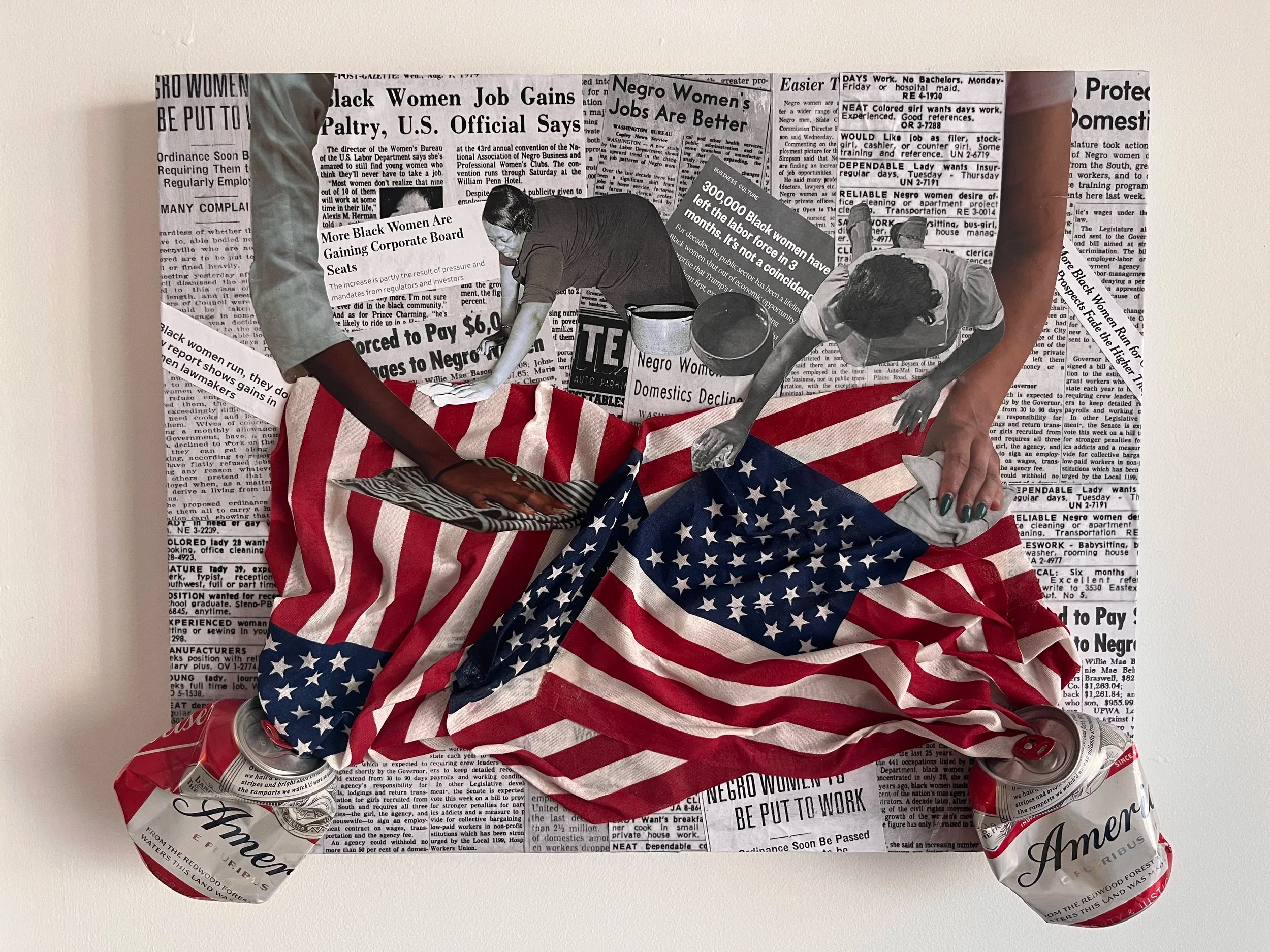
America’s Mess (Is In Our Hands)
Artwork: Christina M. Tapper, America’s Mess (Is In Our Hands), 2025, paper collage, American flags, and recycled beer cans on wood panel, 16x20in. On view at the Northern Manhattan Arts Alliance Gallery, in the America, the Beautiful? exhibition, June 5 - September 2, 2026.
As we approach America’s 250th birthday,* I am reflecting on patriotism, labor, and the critical role of Black women, ancestral and living, in the shaping of this nation. We are the co-creators of this unfinished project we call home. We are the unsung compatriots of this land we call “free.” We are the voters who cast ballots for the lesser of two evils. The domestic laborers who scrub your kitchen floors and wash your dirty draws. The executive leaders who bring order to your organization after a crisis. The nannies who wipe the spit up from your babies’ chins. The deputies who protect your secrets to keep your reputation from tanking. The home health aides who bathe the aging parents you’re too busy to visit. The historical firsts and onlys. The caretakers. The believers.
For many of us navigating the American workforce, we’re taught to manage, clean, and deal with messes not of our own making. We’re told that grit and merit will reap rewards. That we can overcome institutional and political dysfunction and the compounding effects of low wages, poor workplace conditions, and rising costs. As if laboring for a country that refuses to reckon with itself will magically transmute the U.S. into some sort of promised land.
Throughout the cyclical history of this nation, Black women show up for a country that refuses to reciprocate. We do so even when political figures and institutions attempt to render us invisible. Even when employment numbers do not favor us. It’s a type of loyalty as a means for survival. Patriotism despite the perils. Resilience by another name. That is neither judgment nor praise. It’s a truth telling. A record of observations that come with being a Black woman in America, whose labor and ambitions are tied to hopes for a better, freer future that may never come in this lifetime.
America’s Mess (Is in Our Hands) emerges not just from my time spent with news archives or my study of contemporary labor patterns. It’s also personal. It comes from lived experience — my family’s and my own. I am the daughter and granddaughter of Black women laborers. My mother worked as a bartender and security guard. My maternal grandmother was a domestic worker for a white suburban family after she migrated from North Carolina to New York. My paternal great-grandmother was an office cleaner for a corporate organization after she emigrated from Jamaica to Harlem. Though my work life differs from theirs, as I have the privilege to build creative careers across journalism and audio production and pursue visual art, I have experienced bouts of unemployment that many Black women face. And the current numbers are dire.
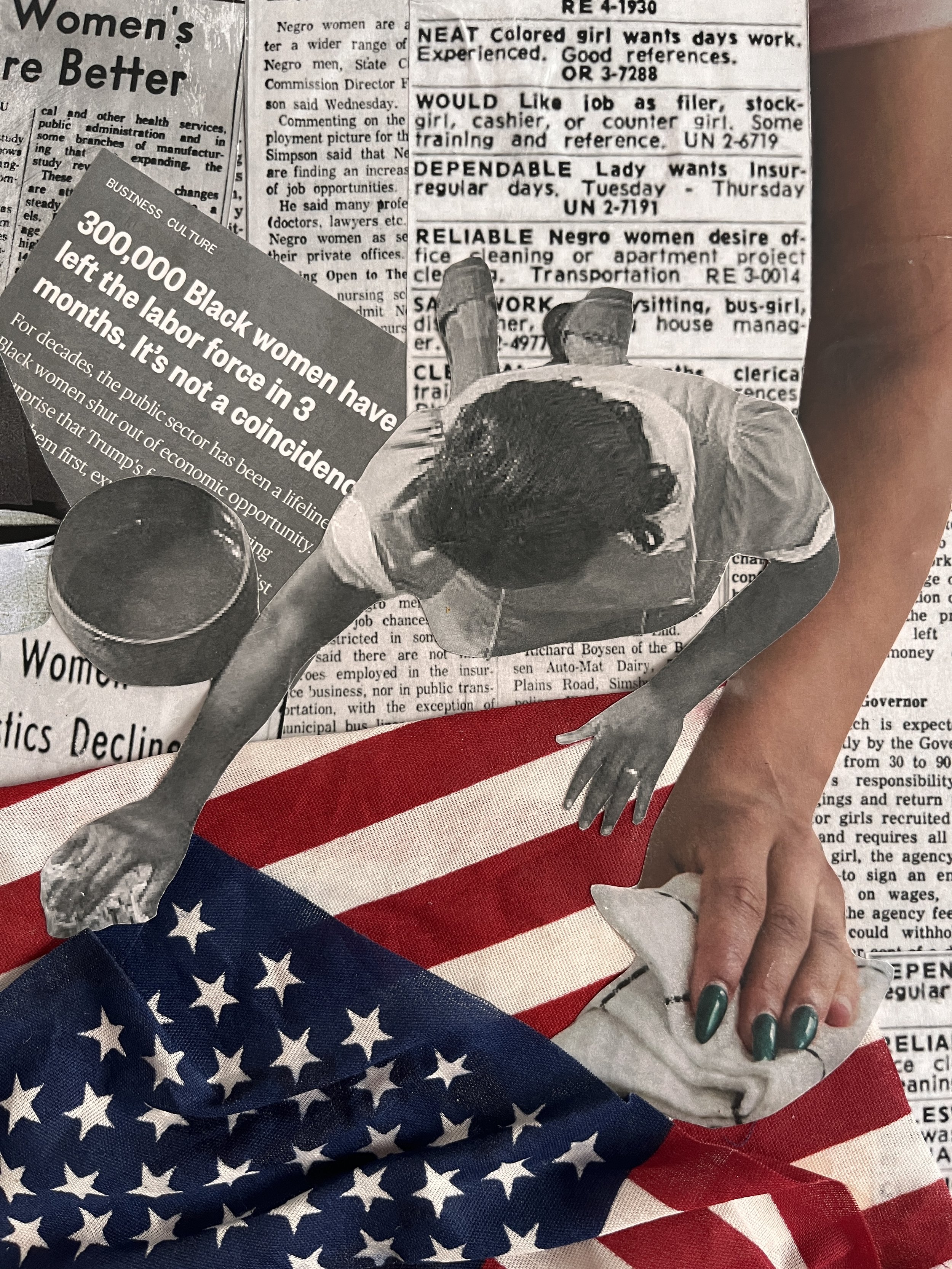
In the summer of 2025, when I started sketching the conceptual framework for America’s Mess (Is In Our Hands), there were reports that more than 300,000 Black women were pushed out or left the labor force that year. Weeks after I completed this artwork in November 2025, gender economist and data scientist Katica Roy reported that the number of Black women who were “economically sidelined,” was closer to 600,000. To see those stats while reading classified ads and news stories about Black women’s labor from the last 100 years, is to be reminded that progress and regress are inseparable in the cultural and political fabric of this country.
Yet, resistance is the undeniable thread throughout our stories.
Take for instance, the Black community members who fought against the city council in Greenville, South Carolina, which considered an ordinance to force Black women to cook and clean for white families in 1918. According to The Greenville News, this legislation targeted the Black wives of World War I soldiers who received federal government stipends that covered most or all of their family’s expenses. The ordinance was also aimed at Black women who worked in informal economies and Black women who simply didn’t want to work. Such agency agitated white residents in Greenville. They were big mad because Black women were opting out. Black community members organized and protested. The city council eventually ditched their discriminatory efforts.
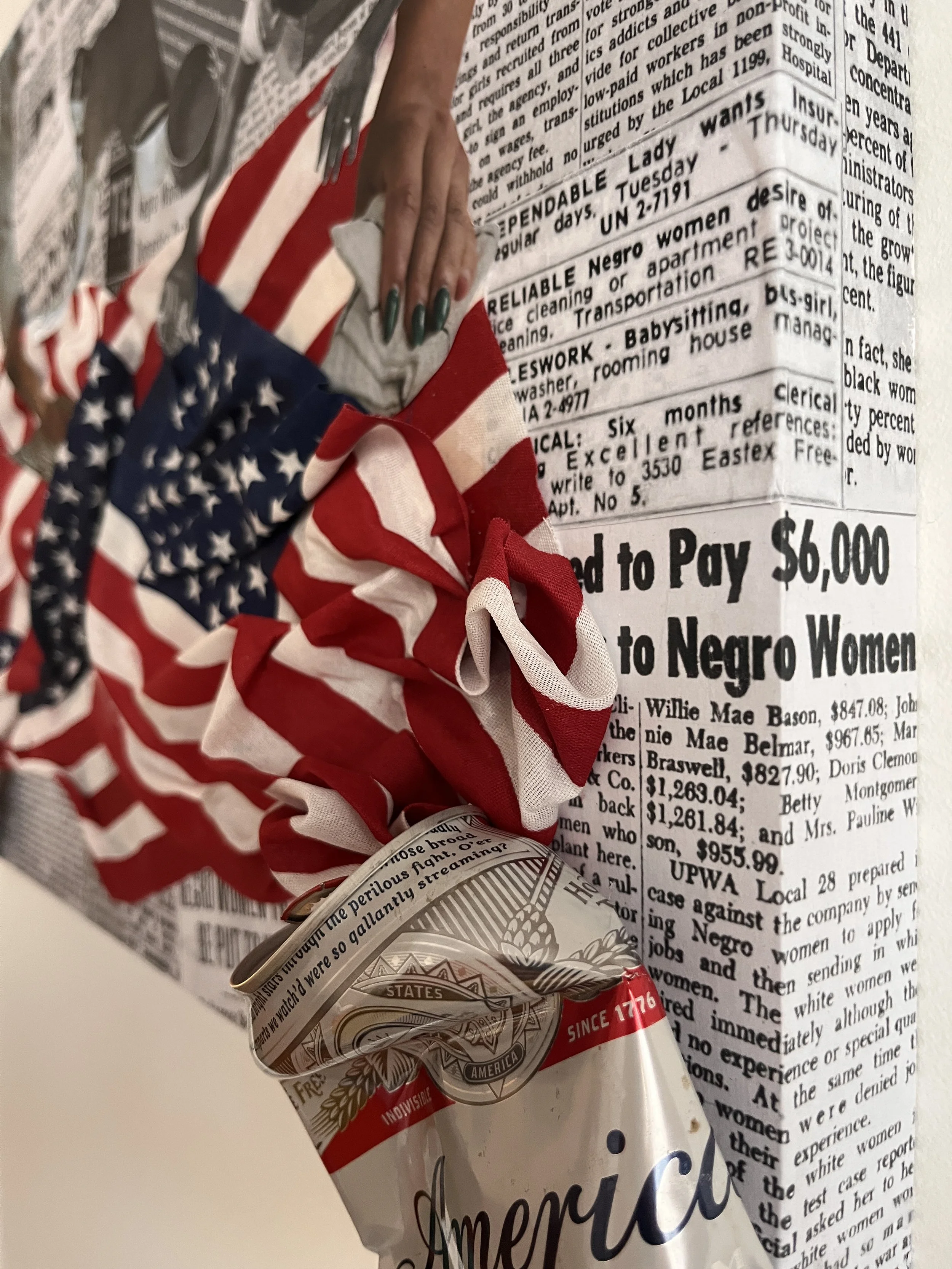
Thirty five years later in Chicago, Black women with labor union support fought for and secured jobs at a meatpacking company that initially denied them work, despite their qualifications. The Black women also received back pay — earnings that they would have made had they been hired when they first applied for the jobs. The Daily Worker newspaper reported that one official at the company wanted to recruit more white women “because we had so many colored people during the war and now we can’t get rid of them,” hence why Black female applicants were rejected in the first place.
Now in 2026, after achieving workplace advancements — though still overindexing in service jobs — and a full decade removed from the Obama years, Black women across professions are faced with high unemployment rates. Especially in the government sector, under the current administration.
But we band together. Building in digital communities, at kitchen tables, and in coffee shops. Through support networks like the Global State of Women Relief Fund and the resource and job referral hub Black Women Rising, we are helping each other steady our feet as the ground shifts beneath us. By gathering for dream sessions, providing childcare and eldercare for each other on interview days, and processing our grief together, we are resisting the isolating effects of uncertainty. And there are many of us are collaborating to build lives that decentralize the very systems that promised so much but delivered so little.
We continue to move forward, exhaustedly. Finding tiny freedoms to hold us. Knowing that our labor is not ancillary.
It’s foundational.
_______
*While 1776 is formally accepted as the birth of America with the Declaration of Independence, the year 1619, when the first enslaved Africans were forcibly brought to Virginia, is an integral date to consider when discussing this nation's history and its founding.
The title of these artworks is a play on an advertising slogan “America is in Your Hands” to promote limited edition beer cans adorned with lyrics from “The Star-Spangled Banner,” among other symbolic language. The ad campaign, with a goal of evoking patriotism and optimism, coincided with the consequential 2016 presidential election cycle.
Sources:
“The Exit Economy is Here. Black Women Are Paying the Highest Price.” Katica Roy, Fortune, November 22, 2025.
“Negro Women to be Put to Work.” The Greenville News, October 2, 1918.
“Swift’s Forced to Pay $6,000 in Back Wages to Negro Women.” The Daily Worker, January 30, 1953.